

Executive Summary
IP Address Management (IPAM) integrated into Data Center Infrastructure Management (DCIM) software eliminates manual tracking errors, prevents IP address conflicts, and provides centralized visibility into network resources. Modius OpenData’s Network Connection Management Module combines physical connectivity diagrams, IP management, and network configuration into one platform, enabling data center operators to manage thousands of addresses efficiently.
Introduction
In today’s fast-paced data center environments, effective management is critical. One essential component of Data Center Infrastructure Management (DCIM) is IP management, often overlooked but crucial for operational success. Corporate networks in enterprise environments can encompass thousands of private IP addresses and hundreds of public ones, making management a significant challenge. This challenge is best addressed with robust IP Address Management (IPAM) software integrated into a comprehensive DCIM solution.
Modius is a leader in providing innovative solutions for data center operators, helping them navigate and excel in this complex landscape.
Identifying the Problem: Challenges in IP Management and Network Connectivity
Complexity of Network Management
As data center networks continue to grow, so does their complexity. Managing these intricate connections becomes increasingly difficult, leading to inefficiencies and potential downtime. Without a clear visualization of these assets, troubleshooting and making necessary adjustments can be a major challenge.
Complexity of IP Management
IP management is often a manual process, relying on spreadsheets, paperwork, and human error-prone processes. This can lead to a range of issues, including:
- IP address conflicts and duplication
- Inefficient allocation of IP addresses
- Difficulty in tracking IP usage and identifying trends
- Inadequate monitoring and troubleshooting of IP-related issues
- Increased risk of IP address exhaustion and security breaches
These problems can have significant consequences, including downtime, data loss, and reputational damage. As data centers continue to grow and evolve, it’s essential to have a robust IP management strategy in place.
The Solution: Enhanced IP Management through DCIM
The Importance of Effective IP Management
Effective IP management is a key factor in maintaining operational efficiency and enhancing network connectivity. By centrally managing IP address assignments, network administrators can reduce human error, avoid conflicting IP spaces, and maintain better control over subnets.
Benefits of Integrated Network Connection Management
Integrating IP management with your DCIM platform can transform network management, providing a holistic view of IP-assigned devices. This vendor-agnostic approach simplifies network processes and improves efficiency. Accurate IP address data is essential for DCIM systems to discover, inventory, and map all network-connected assets, helping to optimize resource utilization. Additionally, DCIM tools rely on this data to manage the configurations of network-connected devices and assess IP address availability and resource allocation.
This integrated approach allows for automation of IP provisioning, assignment and decommissioning, while also aggregating IP data to provide comprehensive reporting and analytics on network utilization and IP metrics. Aligning these tools with operational goals ensures that network management remains efficient and effective.
How Modius OpenData Software Can Help Solve These Challenges
Introduction to Modius OpenData Network Connection Management Module
Modius OpenData offers a comprehensive solution tailored specifically for Data Center managers. The Network Connection Management Module includes three core components:
- A unique visual representation of physical connectivity.
- An IP management component for efficient handling of network address spaces and assignments.
- A network configuration component that provides detailed views of network assets and allows creation of named circuit paths to map the full lifecycle of network connections.
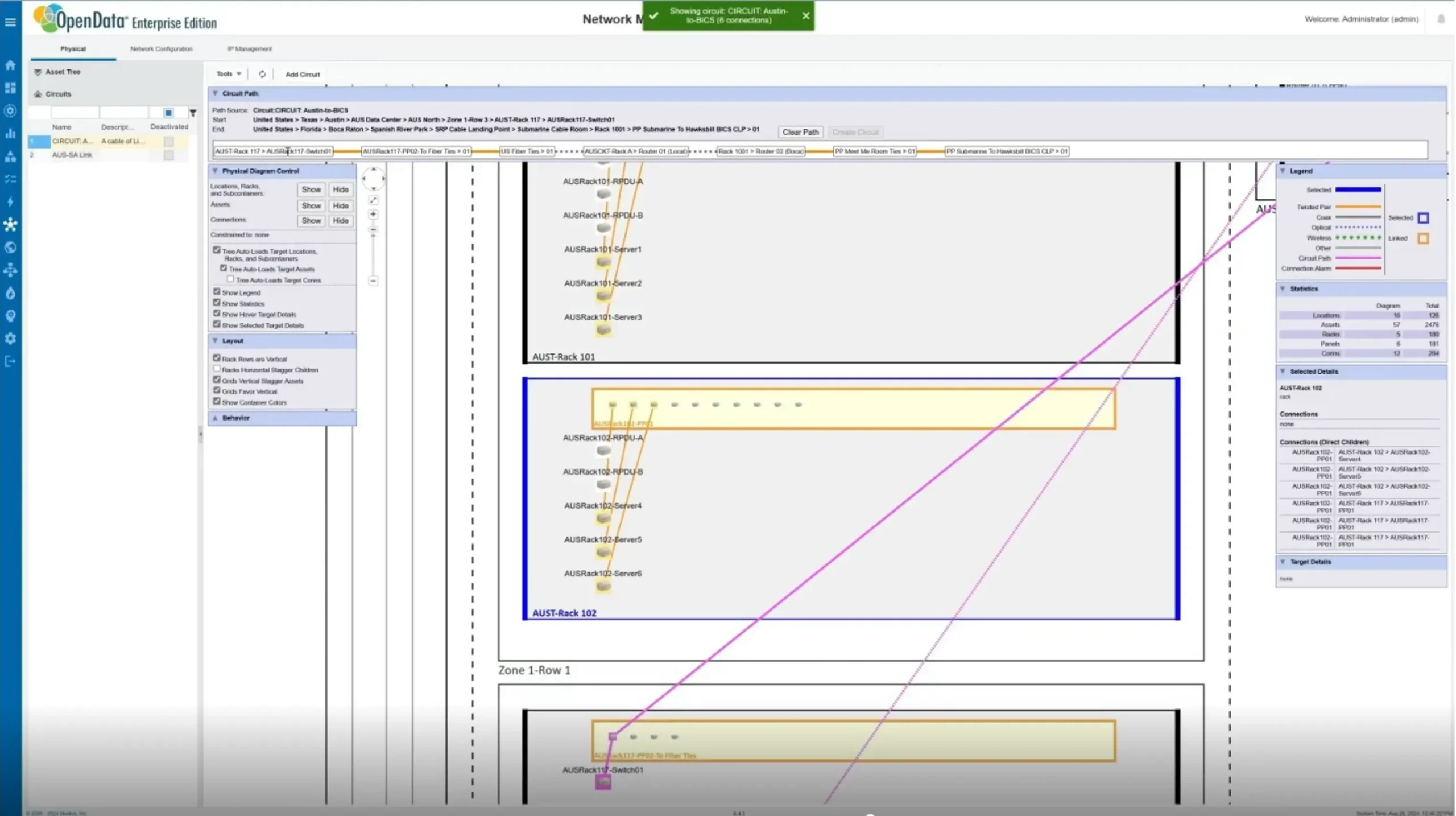
Interactive Physical Diagrams
Physical diagrams of Modius OpenData are interactive and provide a clear, visual representation of network connectivity. Managers can easily identify, add, locate, and track connected assets such as servers, switches, and routers. When issues arise, these diagrams help quickly trace problems, offering enhanced visibility into network infrastructure. By visualizing device locations and rack configurations, managers gain a better understanding of current infrastructure utilization and potential bottlenecks.
IP Management
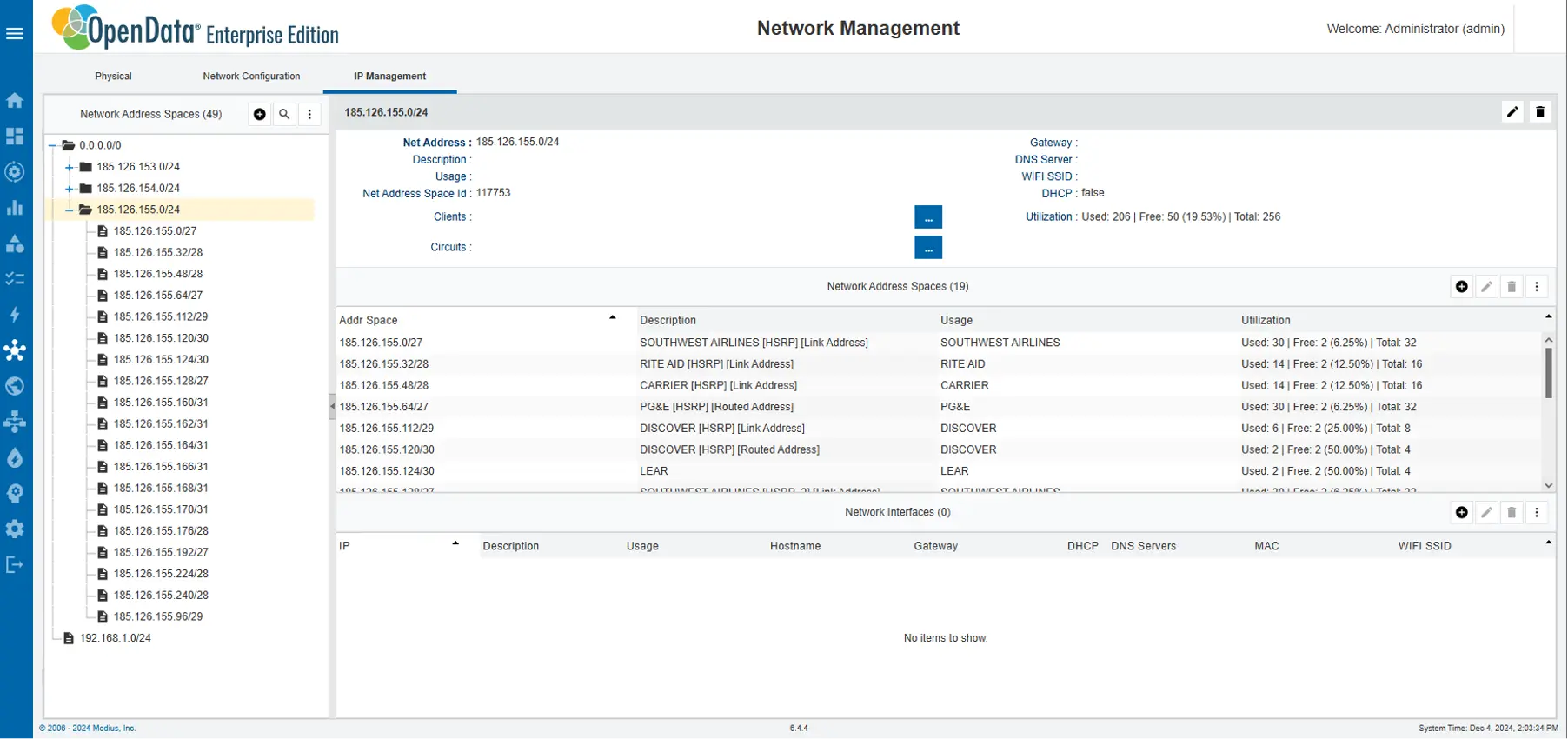
The IP Management component maintains a centralized database of all IP addresses, subnets, and network segments within the organization. Use it to track the allocation, assignment, and utilization of IP addresses across the network. Map IP addresses to the network interfaces of your Modius OpenData asset inventory. Minimize human error with checks such as warning when invalid address spaces are entered, listing available subnets when entering a subnet mask, and listing available IP addresses for a subnet that doesn’t conflict with sibling address spaces and interfaces.
Comprehensive Asset Management
With Modius OpenData, managers have direct access to comprehensive asset details and editing capabilities within the network diagrams. This streamlined connection management process improves accuracy and ensures that network configurations are up to date.
Circuits can be tracked, which are named paths that show all the physical connections making up the path. Attributes can be added to any asset or circuit to track customer-specific data.
Operator-Centric View
In addition to the core components of the Network module, when integrated with the Monitoring module, operators can monitor network health, respond quickly to alarms, and minimize outages. By displaying only essential information, this approach reduces information overload, allowing operators to maintain focus on critical tasks.
Resource Tracking for Growth
Tracking network bandwidth as a resource is crucial for future growth planning. OpenData can calculate bandwidth usage at the port level by monitoring switches and routers. This capability is particularly valuable for colocation providers and others who charge based on bandwidth usage. Accurate tracking of capacity and utilization helps data center managers plan effectively for growth, preventing resource constraints before they become a problem.
Conclusion
Effective IP management within DCIM is vital for improving network connectivity and operational efficiency. Modius OpenData software offers a comprehensive solution transforming how data center operators manage their networks, providing visibility, control, and confidence in their operations.
Next Steps
Ready to elevate your data center operations with enhanced IP management? Contact Modius today to learn more about our innovative solutions. Explore our resources and case studies to discover how Modius OpenData software has impacted DCIM.
Frequently Asked Questions
What is IP management in DCIM?
Answer: IP management in DCIM refers to the centralized tracking, allocation, and monitoring of IP addresses within a data center infrastructure management platform. Instead of relying on spreadsheets and manual processes, DCIM-integrated IPAM automates IP provisioning and decommissioning. Modius OpenData includes a dedicated IP management component that maps addresses to asset inventories and validates entries to prevent conflicts.
Why is manual IP management risky for data centers?
Answer: Manual IP management using spreadsheets is error-prone and leads to IP address conflicts, duplication, inefficient allocation, and security vulnerabilities. These issues can cause downtime, data loss, and reputational damage. Unlike manual processes, OpenData’s IPAM module includes built-in validation checks that warn about invalid address spaces and list available subnets automatically.
How does Modius OpenData handle network connectivity visualization?
Answer: OpenData provides interactive physical diagrams that visually represent network connectivity, allowing managers to identify, locate, and track connected assets like servers, switches, and routers. These diagrams enable rapid troubleshooting and give operators enhanced visibility into infrastructure utilization and bottlenecks. This visual approach differentiates OpenData from text-based network management tools.
Can DCIM track bandwidth usage for colocation billing?
Answer: Yes. OpenData can calculate bandwidth usage at the port level by monitoring switches and routers, making it particularly valuable for colocation providers who charge based on bandwidth consumption. This resource tracking capability also supports growth planning by identifying capacity constraints before they become problems. Learn more in the DCIM Buyer’s Guide.
What are the core components of OpenData’s Network Connection Management Module?
Answer: The module includes three components: visual representation of physical connectivity, an IP management component for handling network address spaces and assignments, and a network configuration component for detailed asset views and circuit path mapping. Together, these provide a complete view of network infrastructure within a single DCIM platform.
Take the first step toward optimizing your network today! We are passionate about helping clients run more profitable data centers and providing operators with the best possible view into a managed facility’s data. We have been delivering DCIM solutions since 2007. We are based in San Francisco and are proud to be a Veteran Owned Small Business (VOSB Certified). You can reach us at sales@modius.com or (888) 323-0066.