
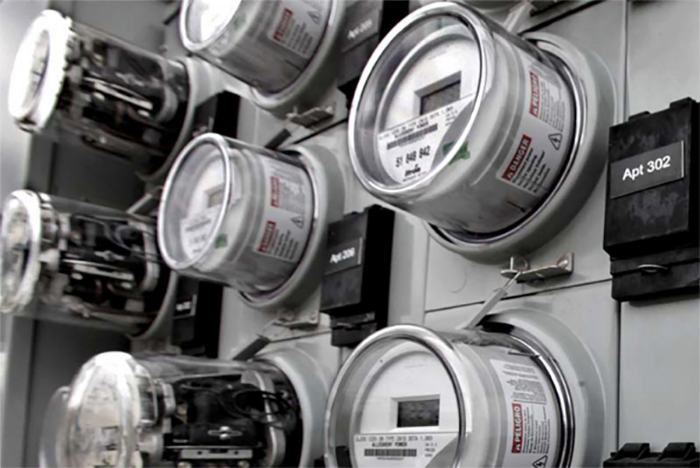
OpenData v3.7’s upgraded Power Capacity Management (PCM) Module uses real-time IoT data collection to dynamically manage power load thresholds for all devices connected to the power chain.
TL;DR: The Modius OpenData Power Capacity Management (PCM) Module replaces traditional nameplate-based power provisioning with real-time IoT data collection, enabling data centers to fine-tune capacity and free up “trapped” power. The module provides a complete software model of the power chain from utility feed to rack servers, supports multiple measurement methods (rated, de-rated, real-time, aggregated), and enables interactive redundancy testing, load balancing analysis, and customer bill-back reporting. By using actual power data instead of manufacturer specifications, operators can increase server density and avoid or delay costly expansions.
SAN FRANCISCO, CA – March 3rd, 2017 – Modius Inc., a recognized leader in data center infrastructure management (DCIM) solutions, today announced that its upgraded Power Capacity Management module for OpenData v3.7 will change the way data centers provision for power capacity. Before IoT, data centers provisioned power capacity based on the power requirements published by the manufacturer of each piece of IT equipment. This method often led to gross over-provisioning of power infrastructure and artificial limits on the amount of equipment that could be supported. Using real-time data, the PCM Module provides actual power usage over time allowing operators to fine tune power capacity provisioning to support more equipment (i.e. transaction per Kw) and free up “trapped” power to avoid or delay a data center build-out costing millions of dollars.
The Modius PCM Module for OpenData v3.7 helps Facility and IT personnel work together to insure that power related outages are avoided and available power is used efficiently to support high levels of equipment density in the data center. The PCM module allows Facility personnel to build an exact model of the data center power infrastructure, from the utility to the servers in the racks, augmenting the manufacturers’ specifications with real-time instrumentation for devices in the power-chain. This allows the end-user to compare power draw specification to real-world data for fine tuning capacity reserves, and simulating fail-over and redundancy scenarios to verify that equipment failures won’t cause service interruptions. The data provided by the PCM module works seamlessly with OpenData’s Asset Management module to insure that IT operations personnel have accurate and up to date information they need to add, replace and move equipment without the fear of causing power-related issues. The PCM Module for OpenData v3.7 provides the following functions.
• Interactive Software Model of Power Infrastructure – Complete documentation of your entire power chain, from the utility feed, UPS’s, Switches, RPP’s, PDU’s to the servers in the racks.
• Multiple Power Measurement Options – Supports a combination of manufacturer’s rated, de-rated, user specified, measured real-time, or downstream power feed aggregates to provide a more accurate representation of power usage and power availability compared to other competitive products.
• Complete or Partial Power Chain Visualization – Detailed visualization of power connections with drill-down to data on individual nodes.
• Load Balancing Analysis – Instantly visualize imbalances in power loads for electrical panels and rack power strips
• Circuit Redundancy Definitions – Provides for the correct mapping for power flow in power architectures with redundant power.
• Redundancy and Load Testing – Interactively test the effect of adding or subtracting load or simulating equipment failures for power infrastructure.
• Provisioned Circuits – Provides the ability to assign power usage to customers or end-users to support bill-back or show-back reporting.
• OpenData Asset Management Support – Works seamlessly with OpenData’s Asset Management Module to prevent power-related service interruptions caused by improper equipment moves, adds, or changes.
“Power is the most expensive operational cost for a data center.” said Craig Compiano, CEO of Modius. “The more accurately you can measure available power and current load, the more money you can save by running your data center with tighter tolerances for provisioned power and with substantially higher server densities to avoid or postpone costly data center expansions.”
“Technology advances based on the Internet of Things and our legacy of collecting data from disparate infrastructure in the data center makes it now practical and affordable to use real-time data to get superior results for power capacity management” added Mr. Compiano. “Organizations that are relying on manufacturers’ specifications for power capacity calculations will struggle to reach the maximum economic benefit simply because their data is based on an estimate, not real data.”
From a single console, the Modius’ OpenData platform can display comprehensive power, environmental and asset information, for a distributed network of facilities – including multiple data centers, server rooms, labs, and network closets. Using these metrics, facility and IT operations personnel can make informed decisions to proactively manage their facilities, reduce power consumption, improve utilization, and mitigate the risk of unplanned outages. The system can be installed either locally within the enterprise network, or hosted remotely in a cloud-based configuration for easier service management.
The OpenData v3.7 Power Capacity Module is available for immediate shipping. For more information on the capabilities of this new software module for the OpenData platform, please visit our website at https://modius.com/.
About Modius
Modius, Inc. is a leading provider of Data Center Infrastructure Management (DCIM) software and solutions for the Internet of Things (IoT). Modius’ data center management software enables IT and facilities personnel to work collaboratively to lower energy costs, expand capacity and improve the reliability and availability of all IT services. The Modius flagship product, OpenData, monitors all power-distribution, cooling and environmental sensors across multiple facilities from a single console, providing intelligent operating decisions based on data from the Internet of Things. For more information on IoT Solutions from Modius or our data center monitoring solutions , visit our website or call (888) 323-0066.
Frequently Asked Questions
What is trapped power in a data center?
Trapped power is the difference between provisioned power capacity (based on manufacturer nameplate ratings) and actual measured power consumption. Since equipment rarely draws its full rated capacity, significant power remains unavailable for new deployments despite being physically present in the infrastructure. Real-time monitoring through DCIM can identify and reclaim this capacity.
How does the PCM Module improve over spreadsheet-based capacity planning?
The PCM Module replaces static spreadsheet calculations with real-time IoT data from all devices in the power chain. It provides live power usage measurements, interactive power chain visualization, automated load balancing analysis, and the ability to simulate failure scenarios, none of which are possible with spreadsheets.
Can the PCM Module simulate power failures?
Yes. Users can interactively test the effect of adding or removing load, or simulate equipment failures anywhere in the power infrastructure. This helps verify that redundant power fail-over architecture works correctly before real emergencies occur.
Does the PCM Module support customer power billing?
Yes. The Provisioned Circuits feature allows operators to assign power usage to customers or end-users for bill-back or show-back reporting, making it particularly valuable for colocation providers who need per-customer power accounting.
Why is real-time data better than nameplate ratings for capacity planning?
Manufacturer nameplate ratings represent maximum theoretical power draw, not actual usage. Real-time monitoring reveals that equipment typically consumes significantly less than rated capacity, meaning operators can safely support more equipment per circuit. Organizations relying on nameplate estimates systematically over-provision, wasting capital and operational resources.