
TL;DR (Executive Summary)
Modern Data Center Infrastructure Management (DCIM) is no longer confined to monitoring racks or tracking facility assets in isolation. True infrastructure management unifies white space, gray space, and edge environments into a single operational view, enabling real-time insight, predictive analytics, and scalable control across the entire data center ecosystem.
- White space and gray space have distinct needs, but cannot be managed independently.
- Modern DCIM has evolved from static monitoring into a real-time decision platform.
- Unified visibility across IT, facilities, and edge sites reduces risk and inefficiency.
- Predictive analytics and cross-domain correlation are now core DCIM requirements.
- A single DCIM platform must adapt to enterprise, colo, edge, and regulated environments.
How DCIM Has Evolved
Early DCIM platforms focused on inventory, static diagrams, and basic environmental alerts. These tools were useful for documentation, but they were not designed for today’s dynamic, distributed, and hybrid infrastructures.
As data centers expanded across on-premises, colocation, cloud-connected, and edge environments, the role of DCIM changed. Operators now need software that delivers real-time visibility, correlates data across domains, and supports proactive decision-making.
- Collect live operational data rather than relying on periodic snapshots
- Apply analytics to identify emerging risk before outages occur
- Integrate IT systems, facility infrastructure, and remote environments
- Provide a shared operational truth for IT and facilities teams
DCIM has moved from passive monitoring to active infrastructure intelligence.
Understanding the Different “Shades” of the Data Center
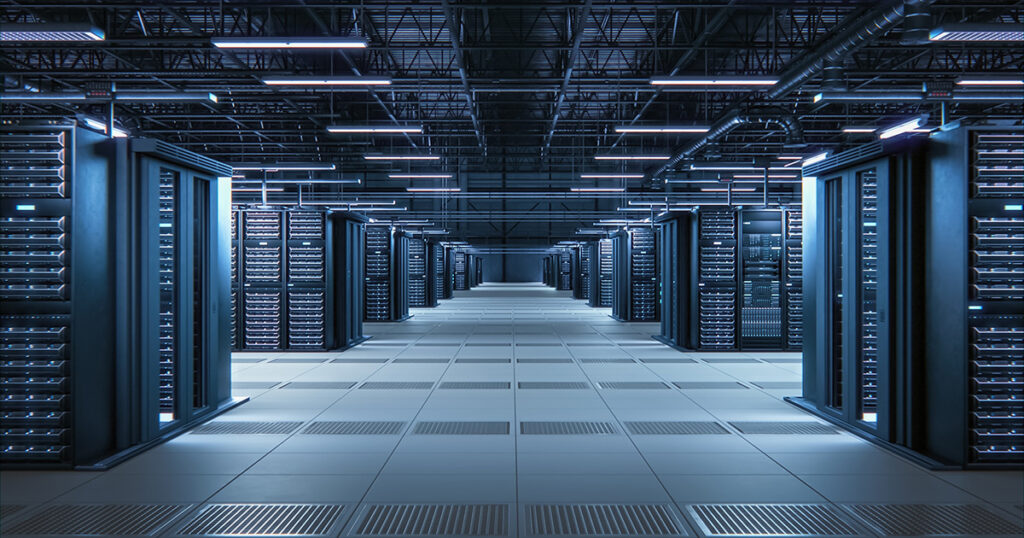
A modern data center is not a single homogeneous environment. It is made up of multiple operational layers, each with different monitoring and management requirements.
White Space
White space contains the IT equipment that delivers compute, storage, and networking. Managing white space typically includes:
- Server, storage, and network device health
- Rack utilization and density
- IT load and thermal impact
Gray Space
Gray space surrounds and supports the white space. It includes:
- Power distribution systems
- UPS units and generators
- Cooling and environmental infrastructure
Although often managed by facilities teams, gray space directly determines uptime and capacity for IT workloads.
Edge and Dark Sites
Edge locations and remote sites extend data center operations beyond traditional facilities. These environments:
- Often lack on-site staff
- Depend heavily on remote monitoring and alerting
- Require lightweight, resilient deployment models
A complete DCIM strategy must provide visibility into all three of these environments.
Why Unified DCIM Matters
When white space and gray space are managed in isolation, blind spots emerge. IT teams may see server alerts without understanding upstream power risk. Facilities teams may see cooling alarms without knowing which workloads are affected.
- Correlate IT load with power and cooling behavior
- Understand cause and effect during incidents
- Plan capacity using real operational data
- Reduce handoffs and miscommunication between teams
Real-World Use Cases Across Environments
Enterprise Data Center
Challenges include siloed IT and facilities tools and limited capacity insight. A unified DCIM approach provides unified dashboards across domains and real-time power and thermal modeling, resulting in improved uptime, coordination, and smarter expansion planning.
Colocation Provider
Challenges include managing multiple tenants and SLAs and diverse infrastructure. Tenant-specific views, reporting, and vendor-agnostic integration result in higher customer satisfaction and operational efficiency at scale.
Edge Environment
Challenges include no on-site staff and a distributed footprint. Remote monitoring, alerting, and centralized visibility result in fewer truck rolls and consistent operations.
Government or Healthcare Facility
Challenges include strict compliance requirements and zero tolerance for downtime. Audit trails, real-time alerting, and high-availability monitoring result in regulatory confidence and continuous service delivery.
What Modern DCIM Must Deliver
- Real-time monitoring across power, cooling, environment, and IT assets
- Predictive analytics to identify risk before failures occur
- Cross-domain correlation to connect IT impact with facility conditions
- Vendor-agnostic integration to avoid lock-in
- Scalable architecture that grows with the infrastructure
Platforms that focus on only one domain or rely on proprietary ecosystems leave critical gaps.
Moving Beyond Fragmented Tools
Traditional vendor-specific tools often address only IT or facilities, limit integration through proprietary interfaces, provide basic reporting without analytics, and struggle to scale across distributed environments.
These limitations create operational blind spots that increase risk and cost. Modern DCIM unifies the entire spectrum of infrastructure management into a single operational framework.
Consider Modius OpenData
Modius OpenData is a DCIM platform built around real-time, trusted data. It brings power, cooling, environmental, and asset information into one clear view, so operators can see what is happening across their facilities.
OpenData connects easily with other operations and IT tools, helping teams spot problems early, make safer changes, and run their data centers with more confidence. OpenData provides a unified operational view that connects white space, gray space, and edge environments, enabling real-time insight, predictive analytics, and scalable control across the entire data center ecosystem.
Want to learn more? The DCIM Buyer’s Guide explains how to evaluate DCIM platforms, compare features, and plan a successful rollout. https://modius.com/dcim-buyers-guide/
Frequently Asked Questions (FAQs)
What is the difference between white space and gray space?
Answer: White space houses IT equipment, while gray space contains the power and cooling systems that support it.
How OpenData Solves the Problem: The platform correlates IT and facility telemetry to provide a unified operational view.
Why is managing both spaces together so important?
Answer: IT performance depends directly on power and cooling behavior.
How OpenData Solves the Problem: Cross-domain visibility reveals cause-and-effect relationships during incidents.
Can DCIM support edge and remote environments?
Answer: Yes, if it is designed for distributed deployment and remote data collection.
How OpenData Solves the Problem: Distributed collectors and centralized analytics enable visibility without on-site staff.
Is modern DCIM only for large data centers?
Answer: No. Enterprises, colocation providers, and regulated facilities all benefit.
How OpenData Solves the Problem: Modular design allows the platform to scale to different environments and sizes.
About the author
Philip Tappe has been an integral part of Modius® for the past 1.5 years as an Integration Engineer, bringing 20 years of experience in A/V, automation, networking, and telecom systems into the data center industry. One of his key contributions has been the redesign of our demo system, enhancing how we showcase Modius solutions. Since entering the field, he has witnessed how AI is transforming DCIM, enabling advanced analytics and deeper insights. Looking ahead, he sees sustainability and energy optimization as top priorities, with future DCIM solutions helping operators reduce carbon footprints and improve efficiency. He is particularly excited about AI’s ability to predict equipment failures, optimize energy usage in real time, and automate complex processes—game-changers for data center operations. OpenData® has powerful reporting and analytics features that provide operators with valuable insights to react quickly to evolving conditions, something Philip sees as a major advantage. Outside of work, he is a passionate musician and amateur radio operator, having recorded five albums with various bands and even contributing to two movie soundtracks. His ability to blend technical expertise with creative problem-solving makes him a vital part of the Modius team.